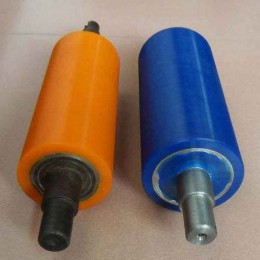
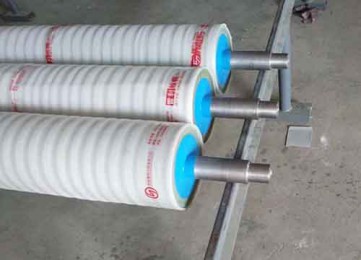
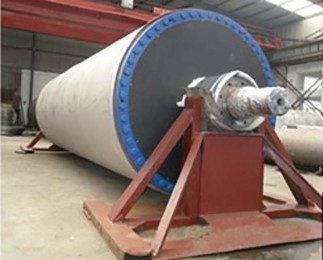
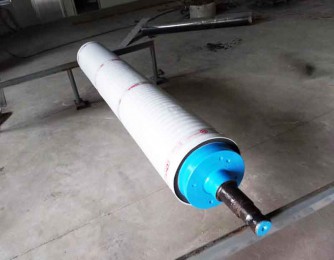
The structure of the bearings and shaft heads in rubber rollers is very fine, and any slight difference can directly affect the effectiveness of use. If the lubrication of the bearings and shaft heads is not good, it can easily cause wear and seriously affect the quality of the rubber rollers, thereby affecting the product quality. So, what are the impacts of rubber roller technology on printing? Now, let's take a look together.
Surface roughness is a very important indicator of rubber roller technology, which controls the performance of transferring ink and dampening solution in rubber roller technology. Generally speaking, the standard for surface roughness can be: the surface roughness of the ink roller is 6-20 microns, and the surface roughness of the alcohol water roller is 4-10 microns. In order to increase the water carrying capacity of some printing machines, the surface of the water roller is ground finer. For example, the surface roughness of the alcohol water roller of the Komori printing machine is 2-6 microns.
The roughness of the surface of rubber rollers not only requires accurate measurement of the transferred ink and water to ensure the stability of water and ink transfer, thereby ensuring the stability of printing colors, but also needs to separate the ink in a uniform ink film form to ensure continuous and smooth ink transmission, and form ink accumulation to compensate for the uneven ink caused by transportation. However, in the actual printing process, due to the contact between printing pressure and other chemical substances acting on the rubber roller, the surface structure of the rubber roller will be lost, which is known as the surface glaze phenomenon.
The type and hardness of rubber are crucial for different printing methods. For most ordinary printing, the hardness of rubber rollers can to some extent reflect the quality of rubber. If the hardness is too high, its anti-corrosion ability may be enhanced, but its ability to carry water and ink will be reduced. In addition, the wear and tear of printing machines and PS printed graphics and text have increased. If the hardness is too low, the service life of the rubber roller will be too short. For the hardness of rubber rollers, it is not only necessary to ensure good water filling and ink filling ability, but also to resist chemical corrosion and physical effects. Generally speaking, the hardness standard for rubber rollers is shore25.
In fact, the care required for a baby crib during transportation and handling is not difficult to achieve. It is necessary to avoid collisions with sharp and hard objects, avoid heavy pressure, and avoid strong friction between foreign objects and the crib. When entering the warehouse, each rubber roller should be inspected for surface dents, roundness and diameter deviations and deformations. The shelf life of rubber rollers should not be too long, not exceeding 6 months. The outer packaging of the rubber rollers in inventory should indicate the date for quality tracking and "pushing old and storing new" when they are released from the warehouse. Establish a reasonable inventory. It's neither a lack of inventory nor too little inventory, nor too much inventory. It is necessary to maintain a certain inventory of rubber rollers. Because rubber rollers should not be put into use immediately. At this point, the internal structure of the rubber roller is not stable enough, and if it is put into use immediately, it is easy to shorten its service life.
The above is the impact of rubber roller technology on printing. Rubber rollers are used in the cotton spinning industry for drawing, roving, and spinning machines. During the spinning and stretching process, the rubber roller is responsible for controlling fiber movement, reducing premature speed changes of floating fibers, improving yarn quality, reducing yarn thickness and hairiness.
Editor: Chihiro