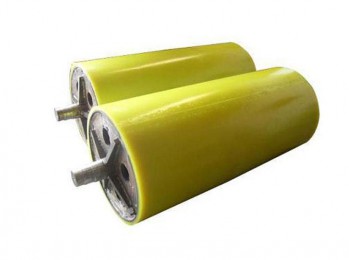
At present, there are various types of printing rollers used in printing factories, among which natural rollers and synthetic rollers are more common. Among them, polyurethane rubber rollers are widely used in international printing and have gradually replaced rubber rollers such as nitrile rubber rollers. Today, the editor will lead you to understand the factors that determine the hardness of printing rollers. Let's take a look together.
The hardness of the printing roller depends on the material of the adhesive. For workers, high-quality rubber rollers need to have good printing hardness. In the printing process, it first depends on the rubber material, followed by post-processing.
The principle for determining the hardness of printing rollers is to appropriately reduce their hardness while ensuring good water supply and ink application capabilities, as well as sufficient resistance to chemical corrosion and physical effects.
In practical printing applications, selecting appropriate rubber materials and types can avoid printing quality failures caused by rubber rollers, thereby ensuring the relative stability and smoothness of printing.
In addition, the performance of rubber rollers used in different places also varies. The rubber roller used in the automatic cleaning device of the printing machine has good transmission and self-cleaning ability for detergents, and has good corrosion resistance; In addition, there are now specialized cleaning rollers to solve the problems of paper wool and paper powder.
People who have been engaged in the printing industry for a long time are well aware of the importance of printing rollers. Because it is directly related to the printing plate and intricately linked to product quality, whether you use a printing offset press, printing relief press, printing gravure press, or printing flexographic press, you are faced with the skills of how to choose and adjust them. If not used and followed properly, not only will the ideal product not be printed, but it will also damage the printing roller and shorten the service life of the printing plate.
This type of rubber roller has moderate hardness and elasticity, high oil resistance, washability, solvent resistance, wear resistance, and stable shape. Soft rollers are generally made of SBR, CR, and PU. The surface of the hard rod was initially made of copper, but later replaced by polyester resin.
The above are the factors that determine the hardness of printing rollers. It is difficult to adjust to a good level and ideal point, and cannot be mastered overnight. Because there is no fixed procedure, it is necessary for leaders to summarize, explore, excavate, innovate, and organize a set of effective printing techniques through long-term production practice. Therefore, it is very important to debug the rubber roller well.
Editor: Chihiro